White Labeling AI Chat bots: Why it matters
AI chat bots are everywhere now. They answer customer service questions on websites. They book appointments for you. Sometimes they even help with legal paperwork. There might be an ai chat bot trying to sell you things! Some chat bots are good. Some are bad. A lot of times they still need a human to check its work and supervise it.
‘AI chatbot’ is a broad term. It usually is running on an LLM like ChatGPT or Claude or Deepseek. People like them for personal use because they’re convenient. Businesses love them because they save money. Customers tolerate them because sometimes they get the job done.
You might see tons of chatbots and wonder how they made their own chat bot! In reality, they didn’t They broadly white labeled an AI model like ChatGPT. Which is pretty easy to do.
Let’s talk about it.
Why White Label a chat bot?
Building your own AI from scratch is a non-starter. It’s really expensive and complicated. Taking someone else’s AI and then white-labeling it skips all the hard parts. It’s what 99% of the chatbots you see are doing– they’re just repackaging and reselling ChatGPT or another AI. And that’s okay! That’s kinda the point of why all these AI companies offer their ai models through API. So other companies can take it rebrand it, customize it, and call it their own chat bot.
Just check out this thread between businesses talking about how to white label a chat bot that uses AI.
There are plenty of No-code platforms out there that make this easy. You don’t need to be a programmer. You just need a use case and some understanding of what you want your chatbot to do.

How Businesses Make Money from AI Chatbots
If you’re gonna create your own AI chatbot, it’s worth thinking about why. Why? Do you want to save money? Make money? Brand yourself as AI forward?
A super popular use case is companies want to use chatbots to cut down on customer support costs. Others want to turn the Ai into a service or good they can sell to make money. White-labeling lets companies sell chatbot services under their brand, charging clients through subscriptions or pay-per-use plans. A law firm might offer a chatbot to help draft contracts. A university might use one to guide students through course registration.
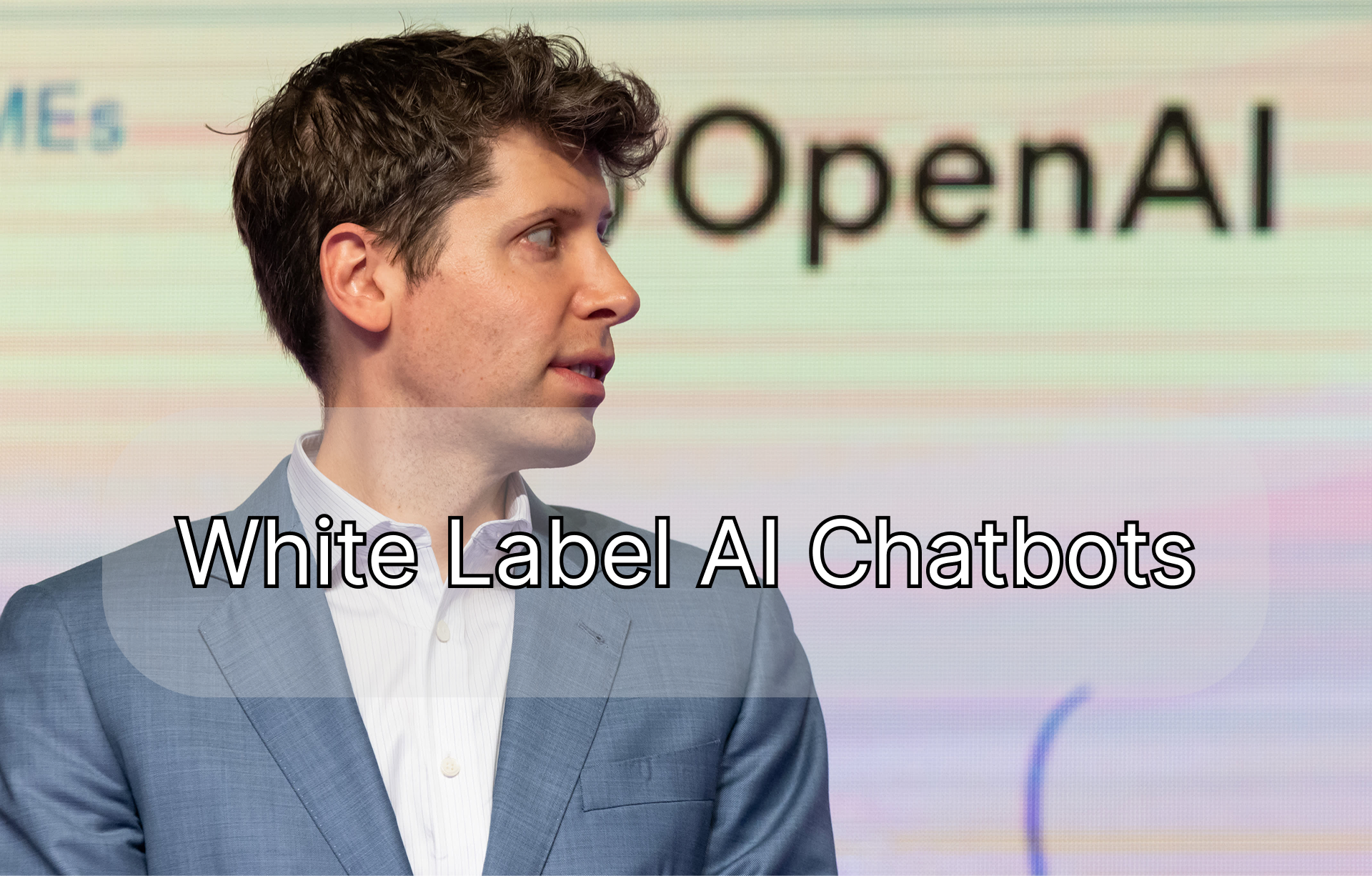
Sam Altman, the founder of OpenAI, even went on the record saying he expected there to be a one-person company worth over a billion dollars because of AI’s scaling effects.

Where These Chatbots End Up
Once built, a chatbot can go just about anywhere. Some live on websites, popping up in the corner of the screen with a friendly “How can I help?” Others get embedded into apps or customer portals, guiding users through forms or answering common questions.
The best chatbots aren’t static. They improve over time. Businesses track how users interact with them, refining responses and adjusting how the bot handles tricky questions. If too many people are abandoning chats before getting an answer, something needs to be fixed.
A Market That’s Only Getting Bigger
AI chatbots aren’t going away. There’s more and more of them literally everyday. The technology is getting better and AI chat bots are able to be used in more and more places.
The key isn’t just having an AI chatbot. You want to have your own Ai chatbot. One that behaves how you want it to. And more importantly, one that looks like it’s yours, your brand and not someone else’s.
For companies that get it right, chatbots are more than just automation tools. They become a part of the brand, working quietly in the background. They are almost like employees!
White-labeling makes that possible. It’s a shortcut to owning an AI solution without building it from scratch. And in a world where speed matters, that’s often the difference between staying ahead and falling behind.
If you have questions about how to white label your own Ai chatbot or how to add ai to your business, reach out to us below!
Leave a Reply